Fort Mason Center, 2 Marina Blvd., Bldg. C, San Francisco, CA 94123 ** Tue. - Sat. 12 PM - 4 PM & Sun. 10 AM - 2 PM**

Falassi Collection

Falassi Collection

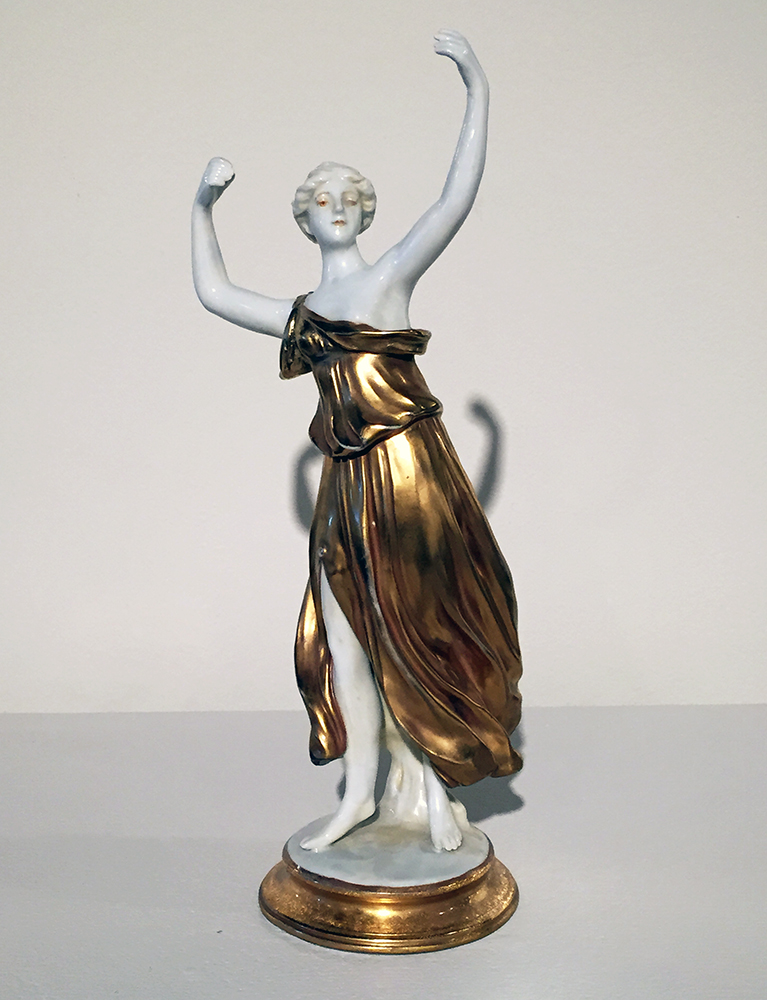
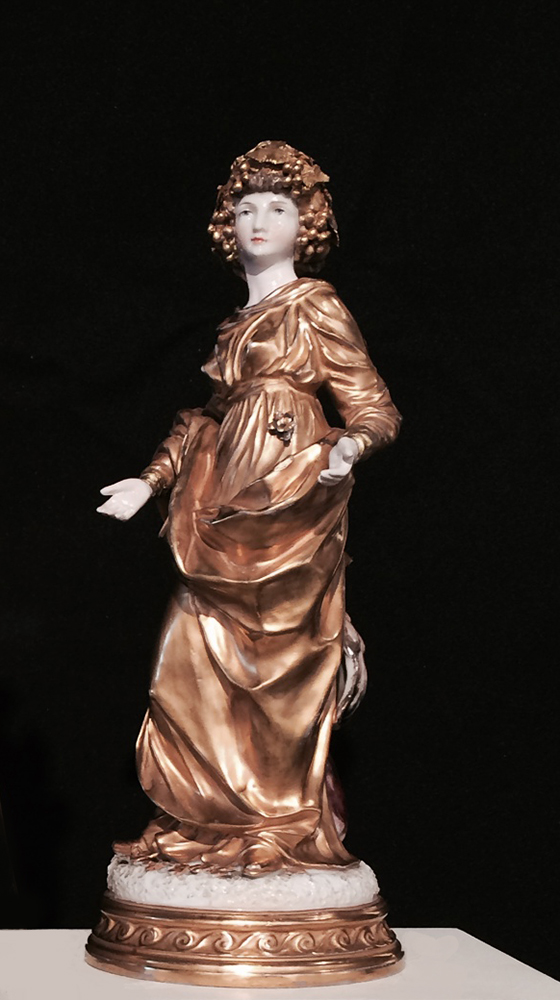
Allegory Of Dance

The Allegory of Dance is a white porcelain figurine by Capodimonte showing a woman caught mid-dance. The arms of the woman are arms raised with strength and grace, further symbolizing feminine power. A gold garment drapes diagonally across her body, accentuating the poise of her legs and enhancing the sense of movement within the piece. She wears a serene expression on her face and her eyes are cast downward, perhaps signifying her innate focus.
Falassi Collection

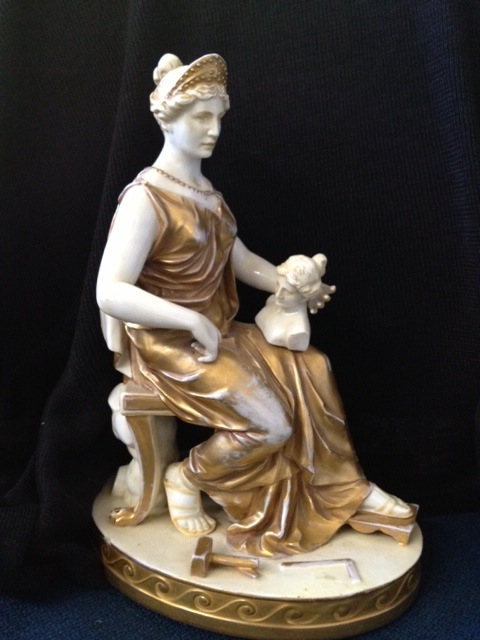
Allegory of Sculpture

The Allegory of Sculpture, a white porcelain figurine by Capodimonte, depicts a seated female figure elegantly draped in a gold garment. Her serene expression, classical hairstyle, and adorned diadem evoke timeless ideals of female beauty and wisdom. In her left hand lies a bust, while a hammer and chisel rest at her feet. The addition of these objects are quintessential of a sculptor's craft, thus suggesting themes of artistic creation and craftsmanship.
Falassi Collection

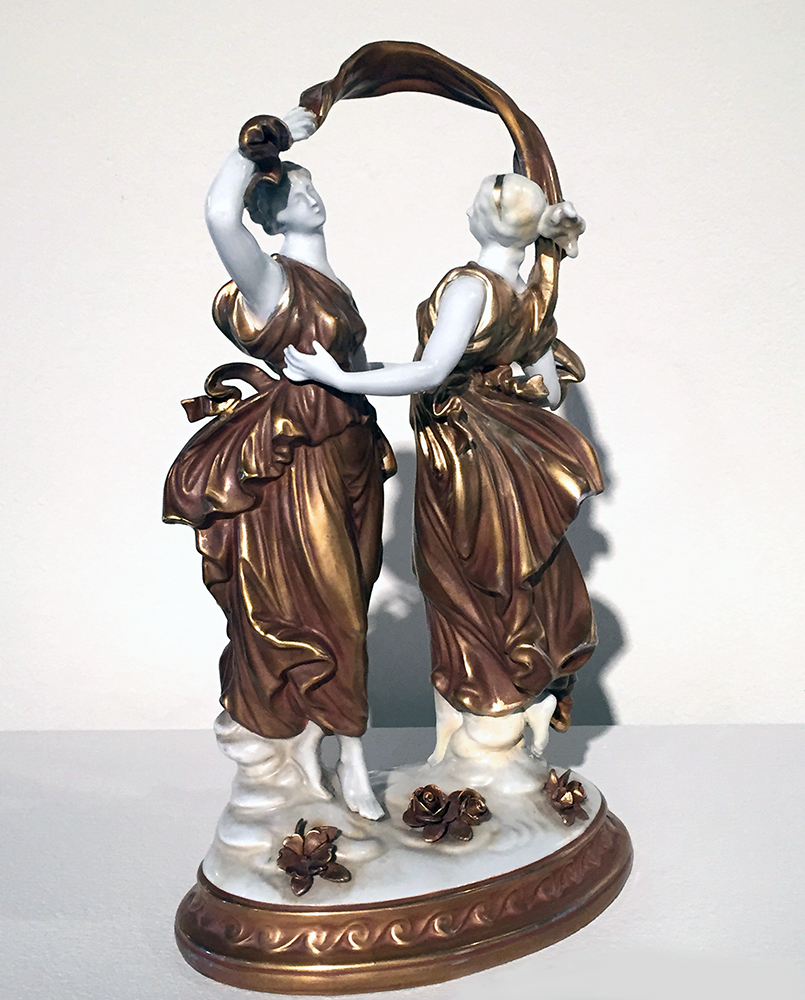
Allegory of Spring

The Allegory of Spring displays two porcelain figurines intertwined in motion. They are both rendered in a gold garment, and at their feet lie delicate gold flowers. The woman on the left has a raised arm of strength whilst the woman on the right holds a bronzed drapery that unites them. Their shared dance beneath one collective fabric celebrates feminine grace and artistic harmony.
Falassi Collection

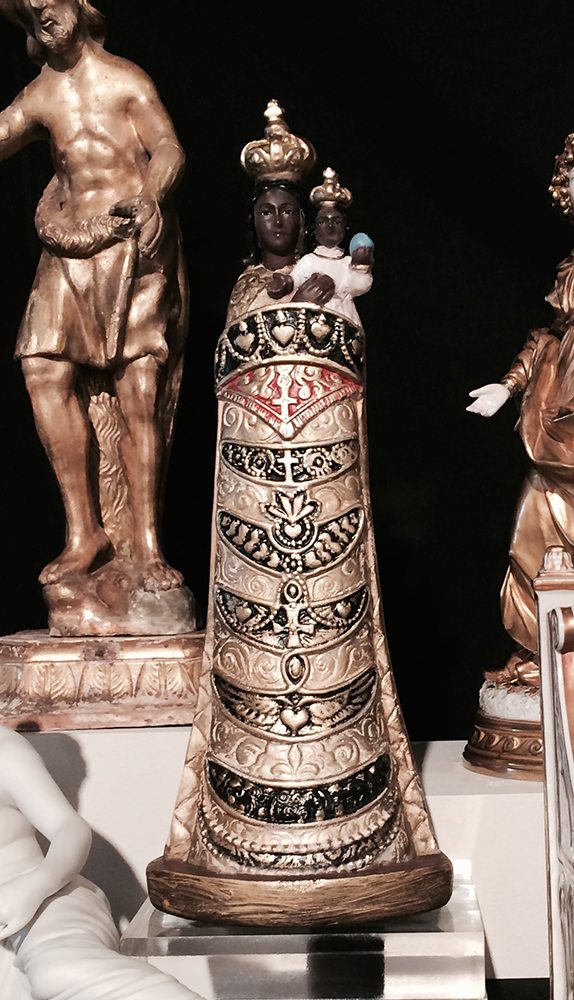
Black Madonna Of Loreto

The Black Madonna of Loreto is a gesso figurine portraying the Virgin Mary and the infant Jesus with deep brown skin, their faces calm and expressive beneath small golden crowns. Mary and her child are wrapped together in a conical mantle that hides their bodies, but their faces and hands are visible. The mantle is covered in swirling patterns and floral designs painted in gold, black, and red, giving the piece a warmth and richness that draws the eye in. Despite the statue’s ornate details, there is a gentle simplicity in the way Mary holds the child close, as if protecting him within the shelter of the cloak.
Falassi Collection

Dancer #1

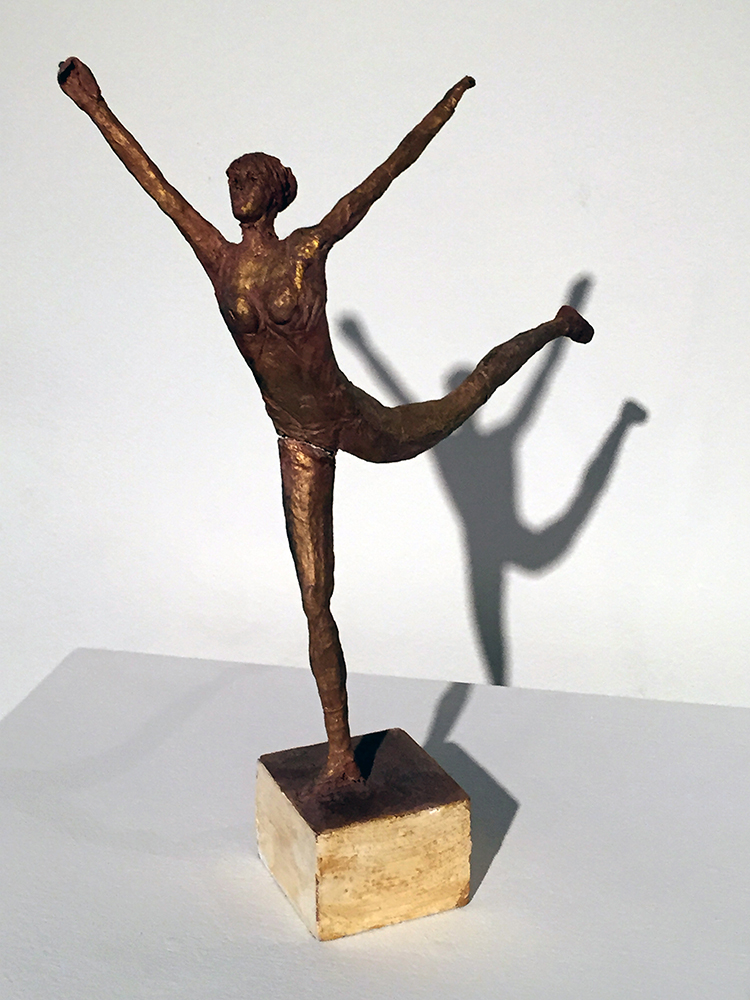
Dancer #1 is a papier mache statuette from Puglia that captures an elongated female figure poised mid-dance. Gracefully balanced on one leg, she extends the other leg backward while lifting both arms in an arc of vitality. The bronzed papier mache statuette absorbs surrounding light, accentuating the fluidity and energy of the human form.
Falassi Collection

Dancer #2

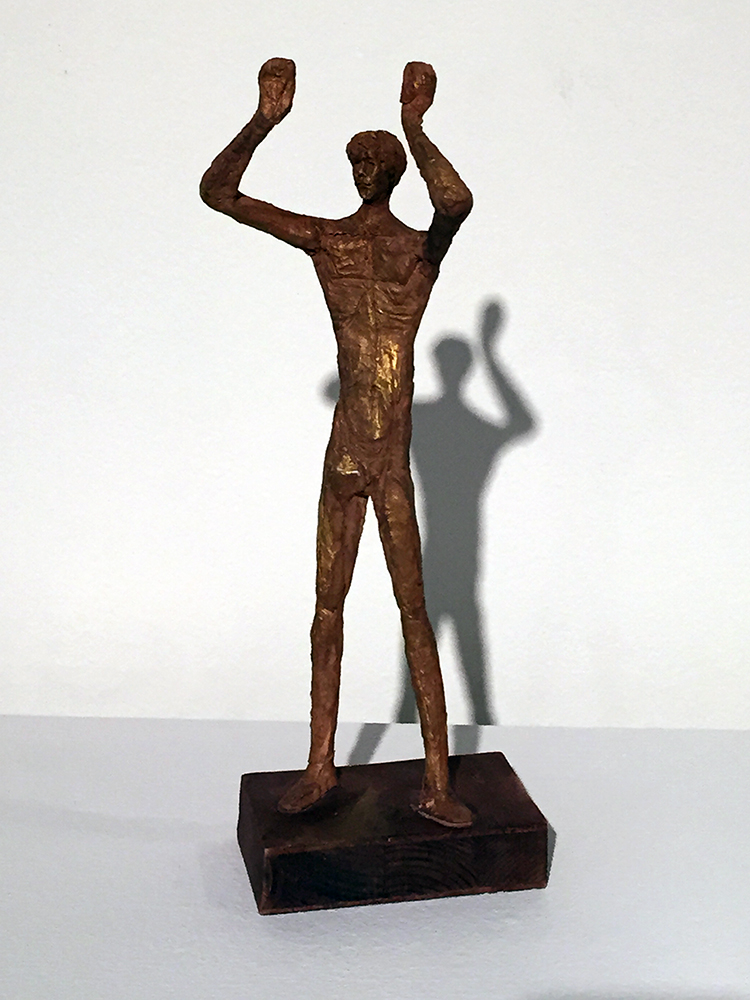
The second part of the collection, Dancer #2, presents a slender papier mache statue. The male form stands firmly in his stance, arms lifted triumphantly overhead. Despite its elongated proportions, the simplified, angular design conveys a striking sense of strength and monumentality. This statue is finished in a gold hue throughout the composition.
Falassi Collection

Dancer #3

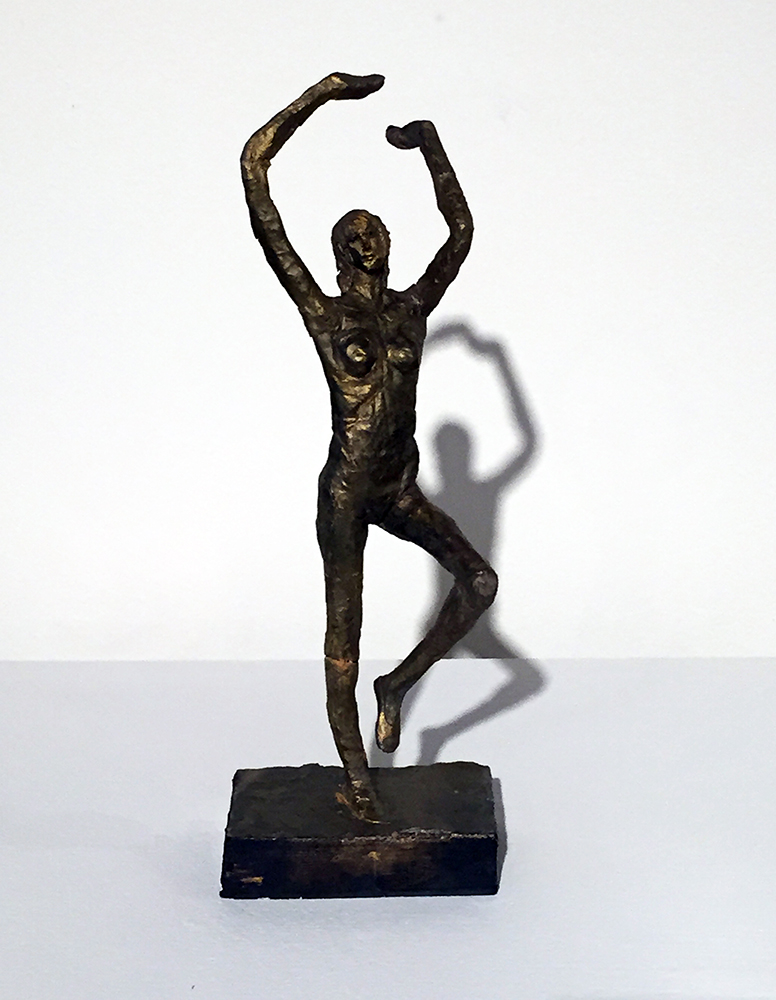
Dancer #3 captures a papier-mâché woman poised in dance. Her bronzed arms curve gracefully above her head, forming an arc of motion. One leg is firmly grounded whilst the other bends slightly, evoking the image of a rooted tree. This grounded stance, as a whole, conveys a harmonious sense of balance and strength. The rich bronze finish gives the figure a warm, earthy presence, enhancing the sense that she is both sculpted from and connected to the natural world.
Falassi Collection

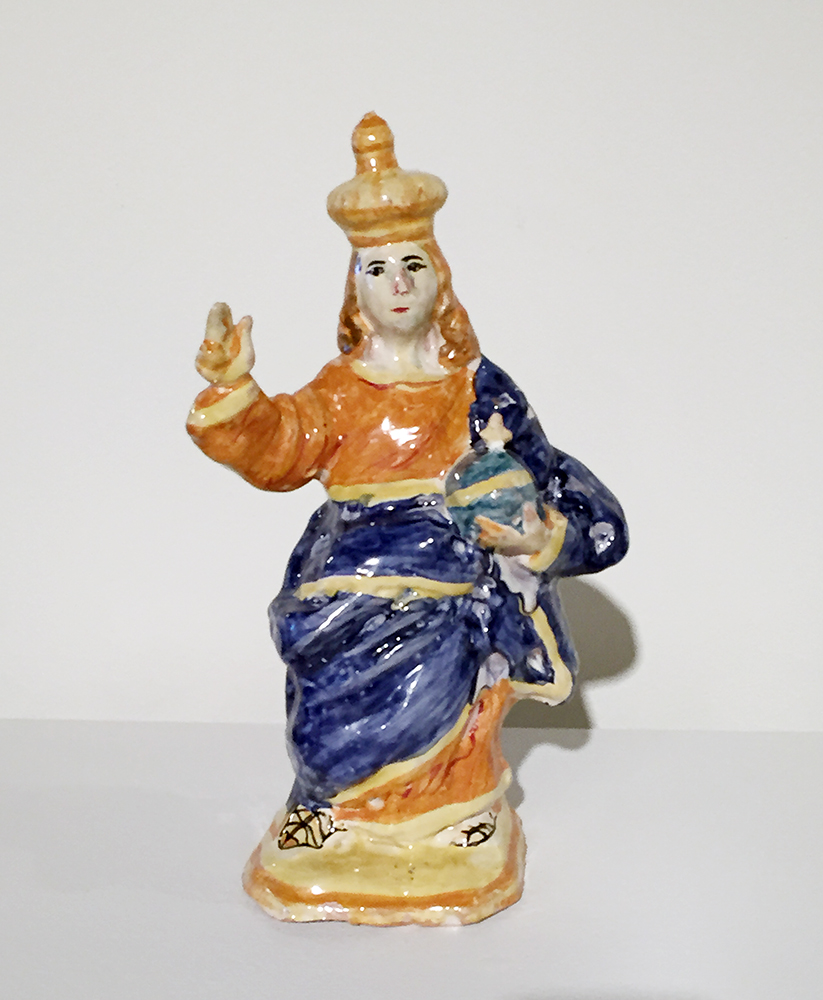
Infant Jesus

A Terracotta figurine from Naples, Infant Jesus displays the Christ Child decorated in a blue and orange robe with a grandeur crown. The color pairing evokes a sacred balance: orange symbolizes the abundance of the earth while blue signifies the transcendence of the heavens. This sense of divinity is further enriched by the graceful wave of Jesus’s right hand and the crown’s godlike symbolism. In his left hand, he holds a small blue orb, perhaps signifying the unity between the earthly and the divine.
Falassi Collection

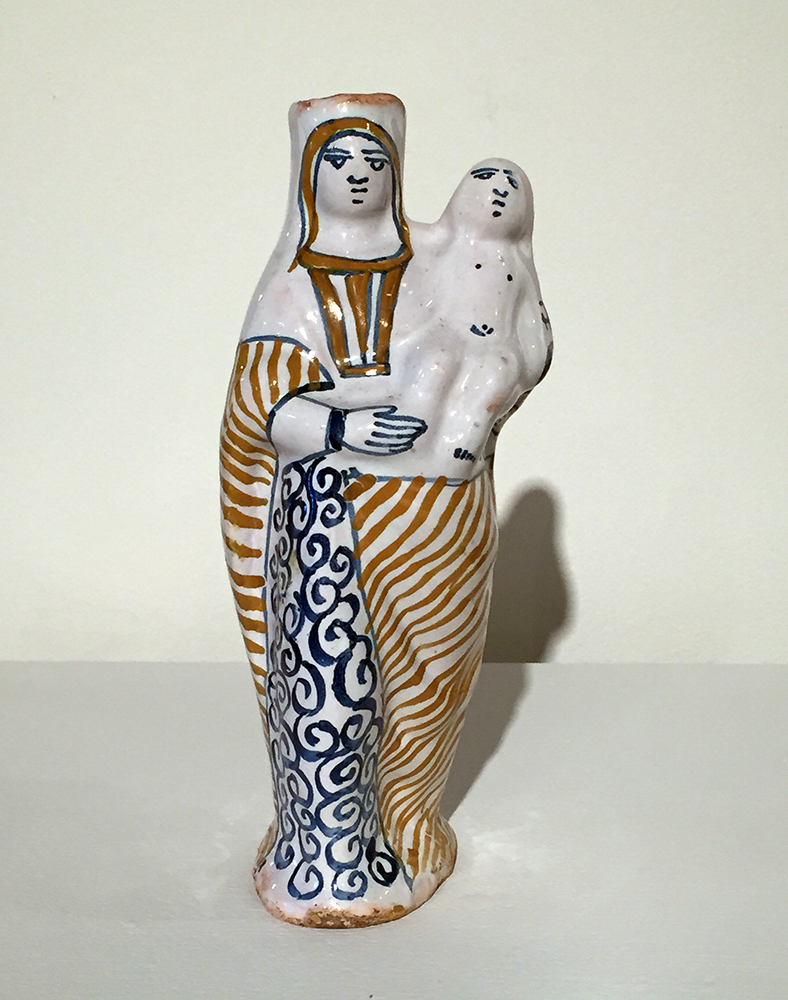
Madonna and Chlld

Madonna and Child is a painted terracotta figurine that captures the Madonna holding the Christ Child. The shape of the statue is simplistic, yet the contrasting motifs of gold stripes and blue swirls create a sense of sacrality. At her left side rests the child who is finished with minimal detail and subdued coloring; perhaps, implying the importance of purity.
Falassi Collection

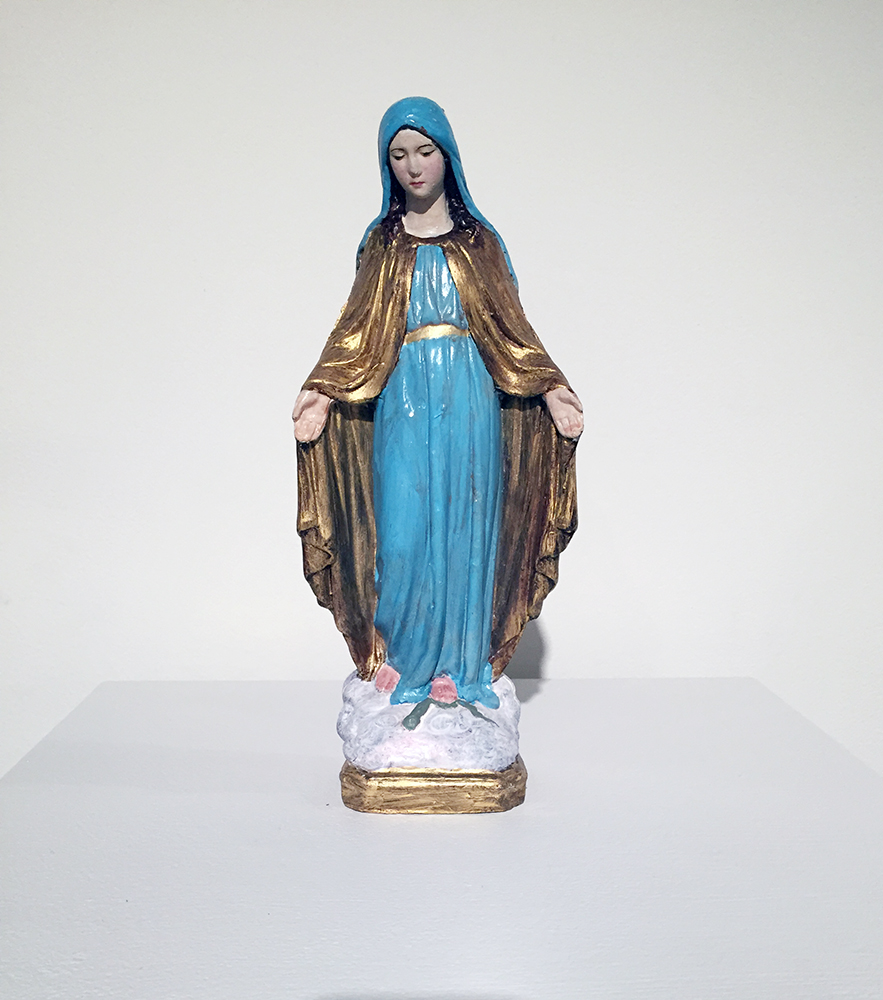
Madonna Immacolata

The Madonna Immacolata is a Gesso figurine representing the Immaculate Virgin Mary. The figure is placed gracefully on a cloud-like base alongside a pink rose which symbolizes divine beauty and purity. The eyes of Madonna are gazed downward, and she wears a solemn expression on her face. Hands extended gently outward, the Virgin Mary is finished in an aquamarine robe and a gold mantle, embodying an abundant sense of serenity.
Falassi Collection

Madonna Of The Seven Sorrows

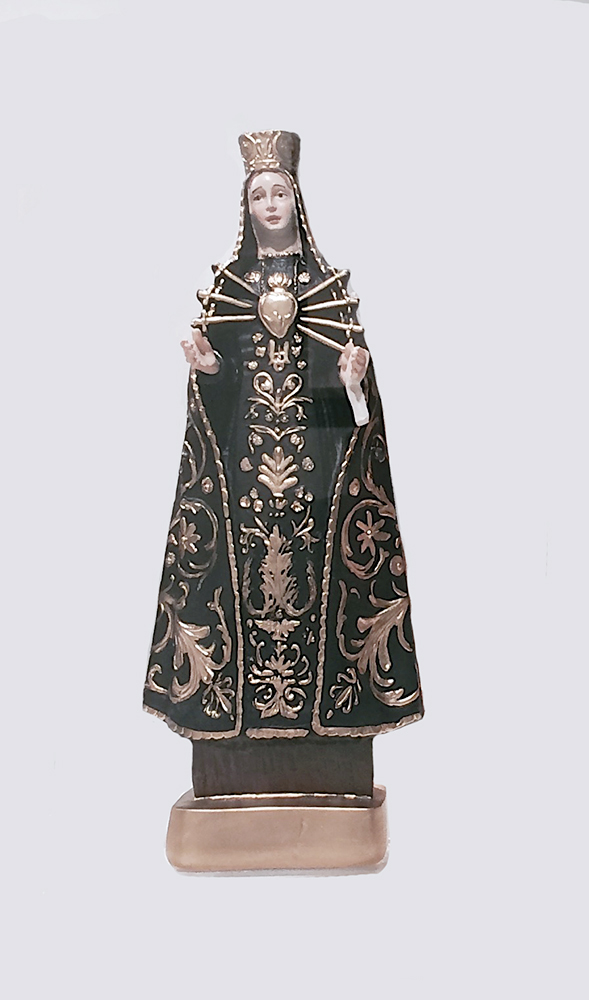
A Gesso figurine, the Madonna Of The Seven Sorrows embodies the Seven Sorrows that the Virgin Mary has endured throughout her life, symbolized by the seven swords piercing her flaming heart. She is depicted wearing a long, black robe which is richly adorned with gold floral patterns and motifs. She wears an expression of pain and there is a crown-like structure atop her head. The stark black coloring paired with the stature of her gold crown reflects themes of vulnerability and sacrifice.
Falassi Collection

Madonna with Globe

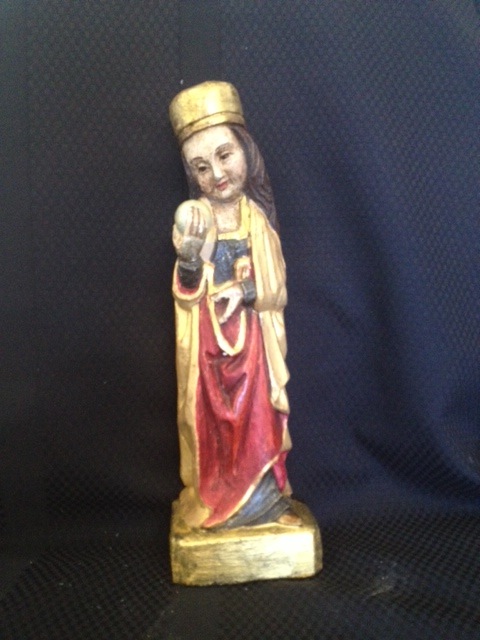
Madonna with Globe is a wooden statuette that depicts the Virgin Mary as the Queen of Heaven, thus symbolized by the small globe held in her right hand. She is dressed in a rich red skirt, a flowing golden mantle, and a royal crown atop her head. In her right hand lies a golden globe which she looks at longingly. The striking contrast of gold and red highlights the strength and devotion needed to guide the world under her watchful care.
Falassi Collection

Moses

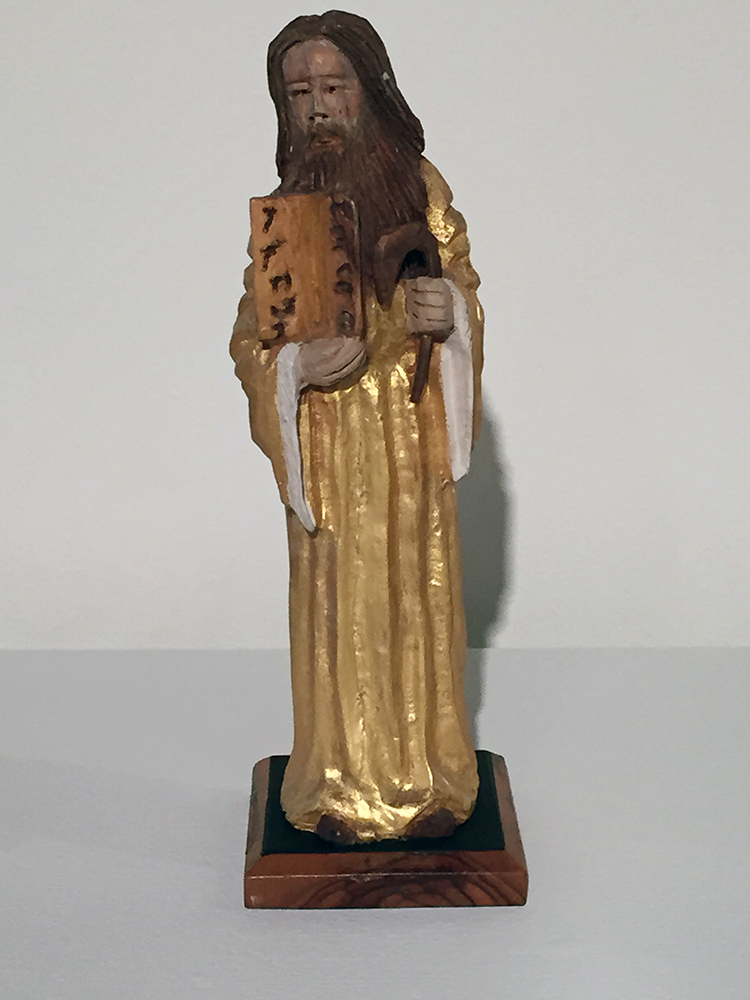
Moses is a 20th century wooden figurine that portrays Moses, a biblical prophet, draped in a golden robe. In one hand, he holds a stone tablet that is inscribed with various markings that likely represent the Ten Commandments. In the other hand, he grasps a wooden staff that is often associated with divine authority. Both his solemn expression and his voluminous hair evoke a sense of reverence.
Falassi Collection

Saint Peter

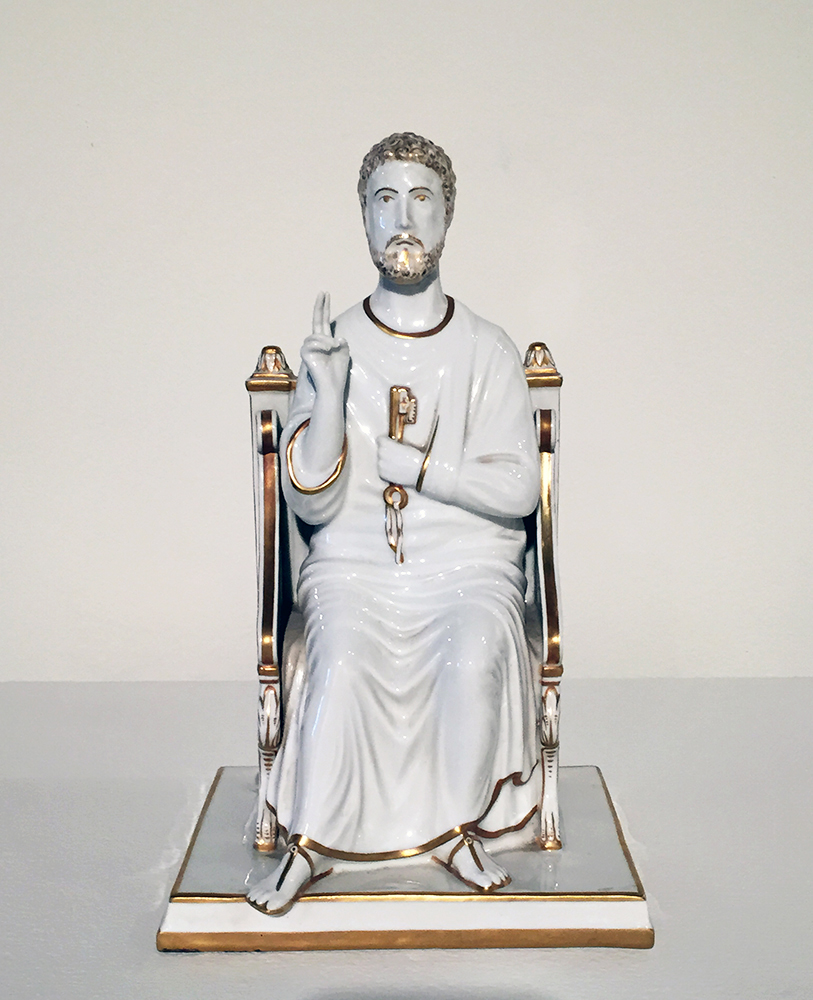
This white porcelain statue by Richard Ginori depicts Saint Peter, one of the twelve apostles of Jesus and regarded as the first pope by the Roman Catholic Church. He is shown in stark white coloring with an addition of minimal gold accents. Seated on an ornate throne, Peter is portrayed with a solemn expression and with iconic attributes: the key in his left hand symbolizes the “keys to the kingdom of heaven,” and his raised right hand is shown as a gesture of blessing. The adornation of gold accents draws inspiration from traditional religious statuary, specifically the famed bronze statue of Saint Peter in St. Peter’s Basilica in Vatican City. This piece exemplifies devotional craftsmanship and reflects the enduring legacy of Peter as a spiritual gatekeeper.
Falassi Collection

San Giovacchino

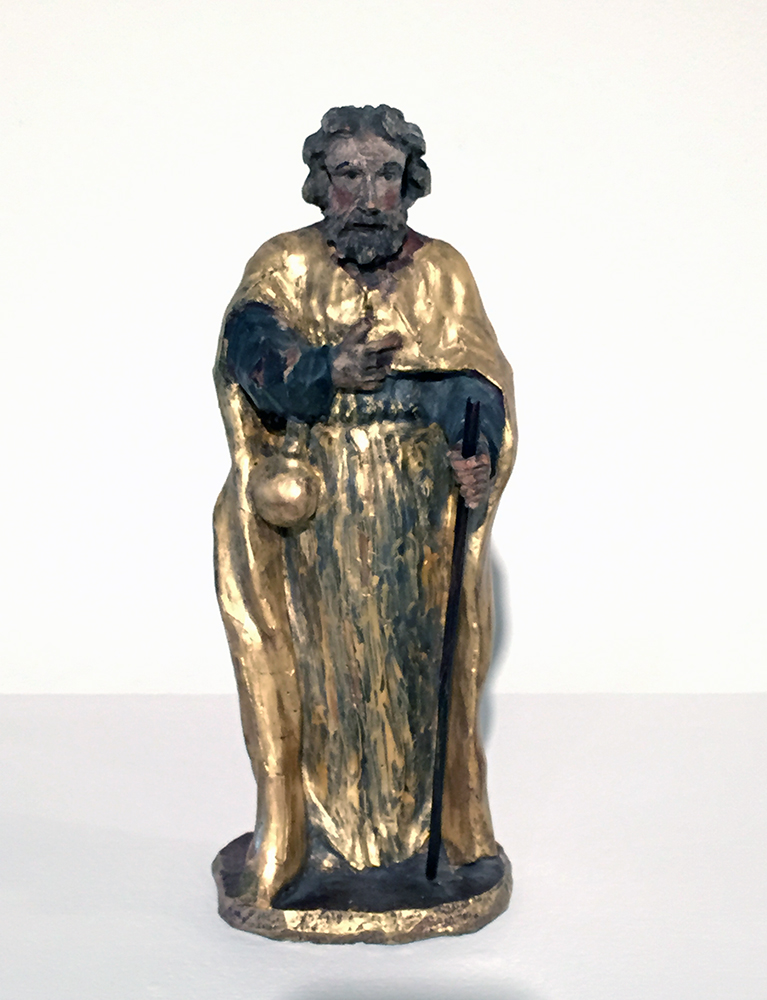
A sculpted wooden statue, San Giovacchino is representative of Saint Joachim who is traditionally honored as the father of the Virgin Mary and husband of Saint Anne. The figure is shown in a contemplative pose and is finished with a gilded robe, blue undergarments, and a staff– often a symbol of pilgrimage and spiritual journey. Joachim’s serene expression and modest posture invite reflection on themes of faith, lineage, and divine providence. Though modest in scale, the statute powerfully conveys the spiritual significance of this biblical patriarch.
Falassi Collection

St. Anne

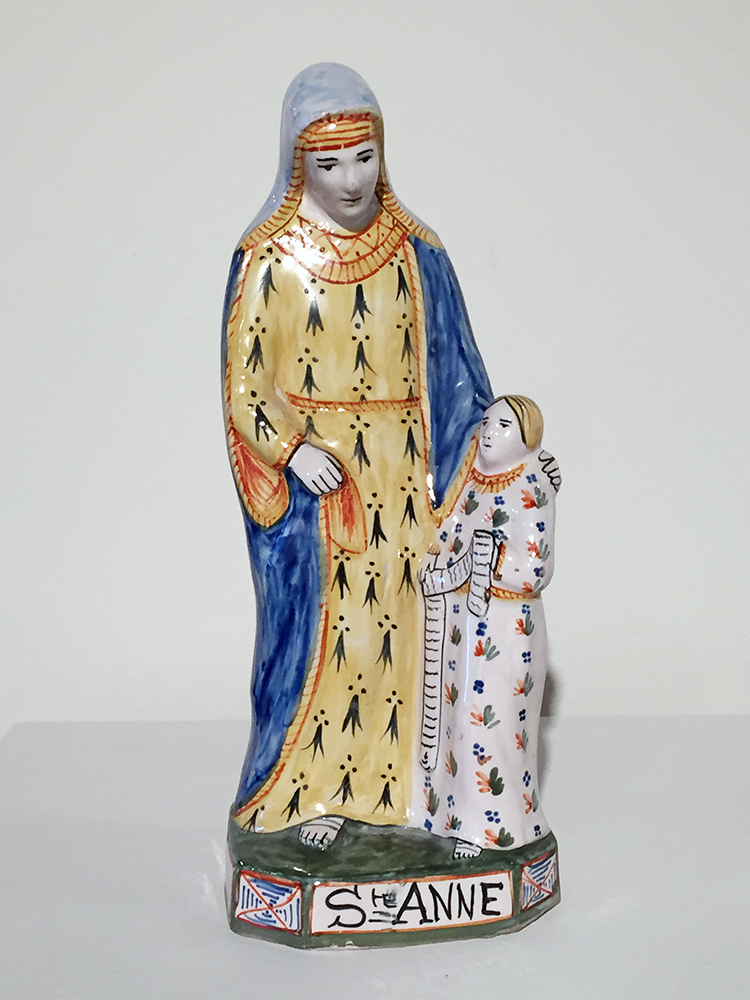
This brightly colored terracotta figurine shows Saint Anne, the mother of the Virgin Mary, gently guiding her daughter in the study of scripture. Saint Anne is dressed in a blue and yellow robe adorned with an ermine pattern. The child Mary, depicted at her side, holds an unfurled scroll and wears a white floral-patterned garment. Celebrated as the patron saint of mothers and educators, Saint Anne is portrayed as a nurturing teacher who values the art of passing on wisdom to younger generations.
Falassi Collection

St. Catherine of Siena

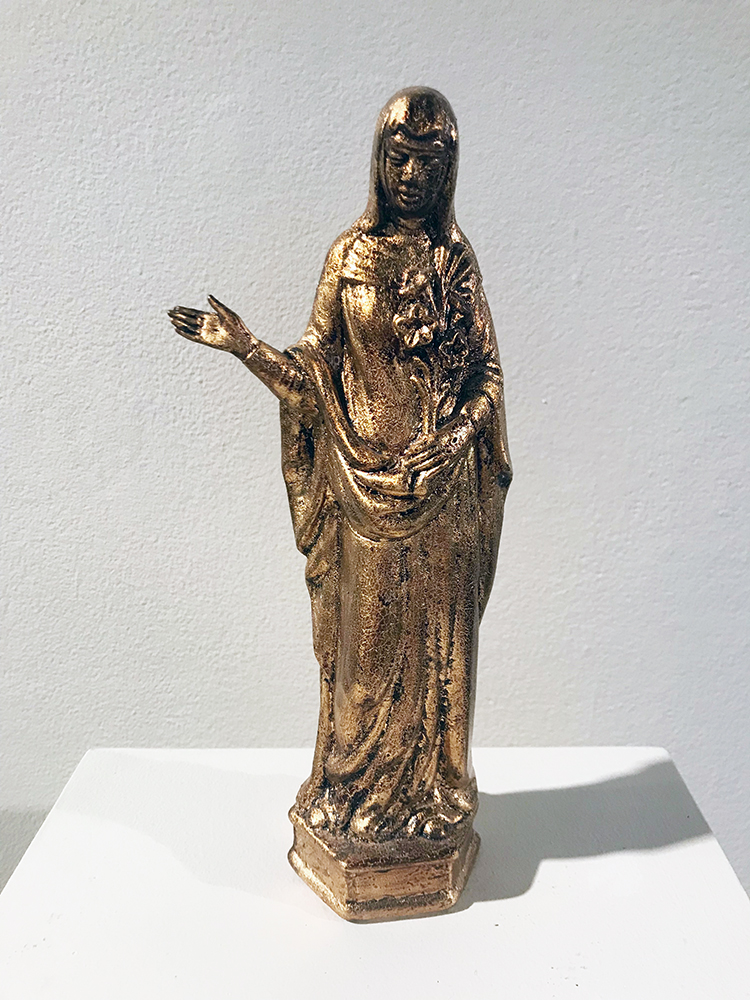
This Gesso figurine by Fabio Neri represents Saint Catherine of Siena, a fourteenth-century mystic and Doctor of the Church celebrated for her theological writings and divine visions. The figure is draped in flowing gold robes and her eyes are gazed downward. Sant Catherine's right hand is extended in a gesture of benediction and her right hand clutches a cluster of flowers. Finished in a gold hue, the statuette’s coloring further evokes the divine radiance traditionally associated with Christ piety.
Falassi Collection

St. Cecilia

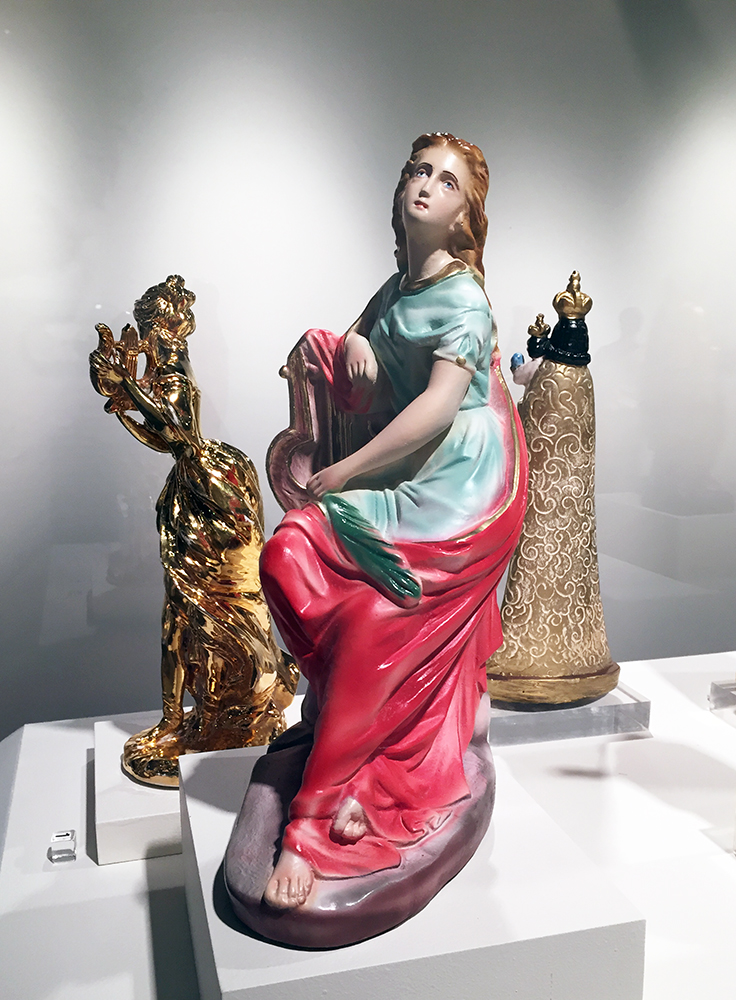
St. Cecilia is a painted Gesso figurine depicting the patron saint of music. Gazing upward in contemplation, Saint Cecilia is seated gracefully with a harp rested on her right hip and long, red hair cascading down her back. The contrasting hues of red and turquoise of her garment enliven the composition, evoking the sense of divine inspiration and artistic devotion that defines her iconography.
Falassi Collection

St. Charles Borromeo

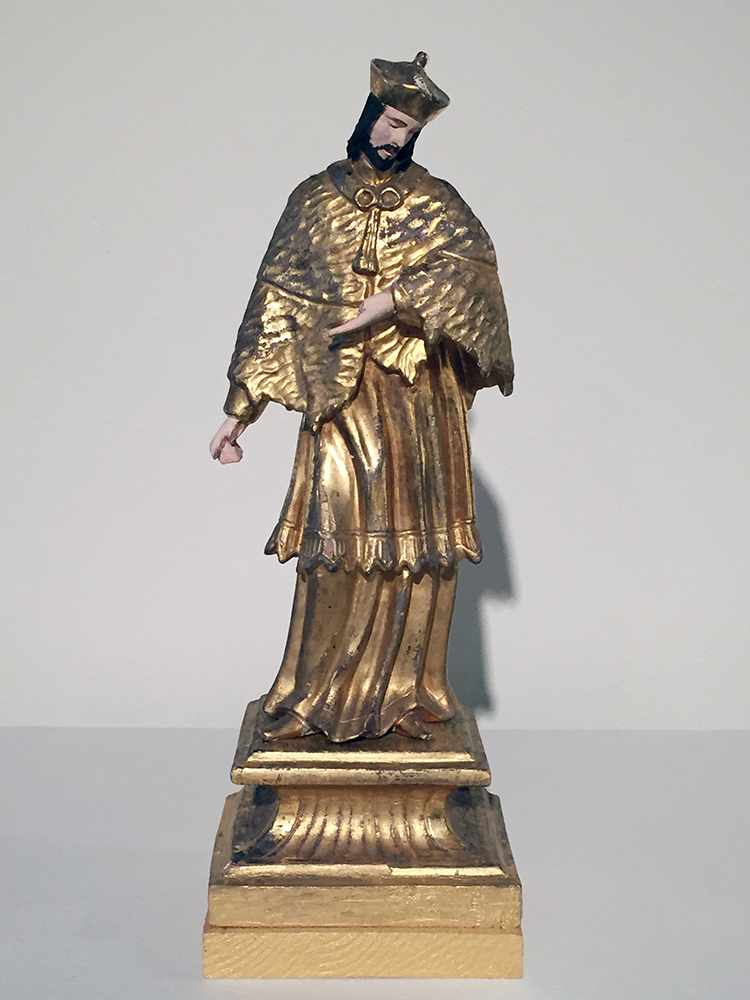
This finely carved wooden statue from Arezzo represents Saint Charles Borromeo, a central figure of the Counter-Reformation and one of the most influential Catholic reformers of the 16th century. The gilded figure is shown wearing a long, flowing robe with intricately carved folds, topped with a short, ornate mantle draped elegantly over his shoulders. On his head rests a biretta, the traditional square cap worn by cardinals, which further emphasizes his clerical identity.
Falassi Collection

St. Charles Borromeo

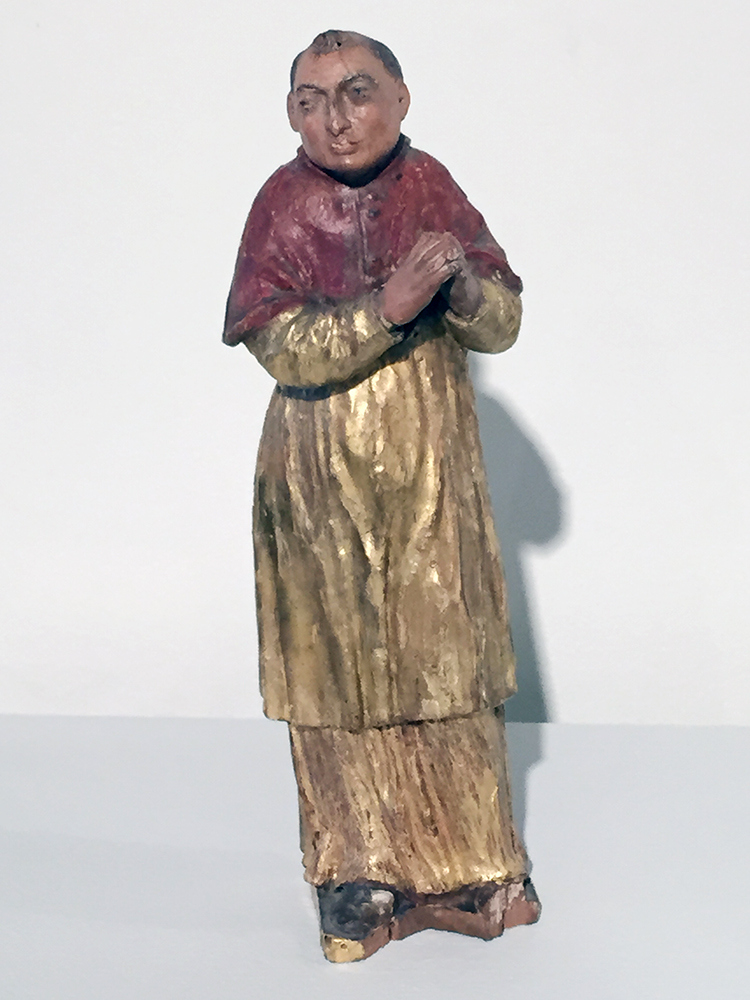
St. Charles Borromeo portrays a prominent 16th-century Catholic cardinal known for his humility and dedication to Church reform. The wooden statuette is shown wearing a gold cassock and rochet with a red mozzetta draped over his shoulders. Both his modest expression and his prayerful pose further establish his embodiment of episcopal virtue and spiritual devotion.
Falassi Collection

St. John the Baptist

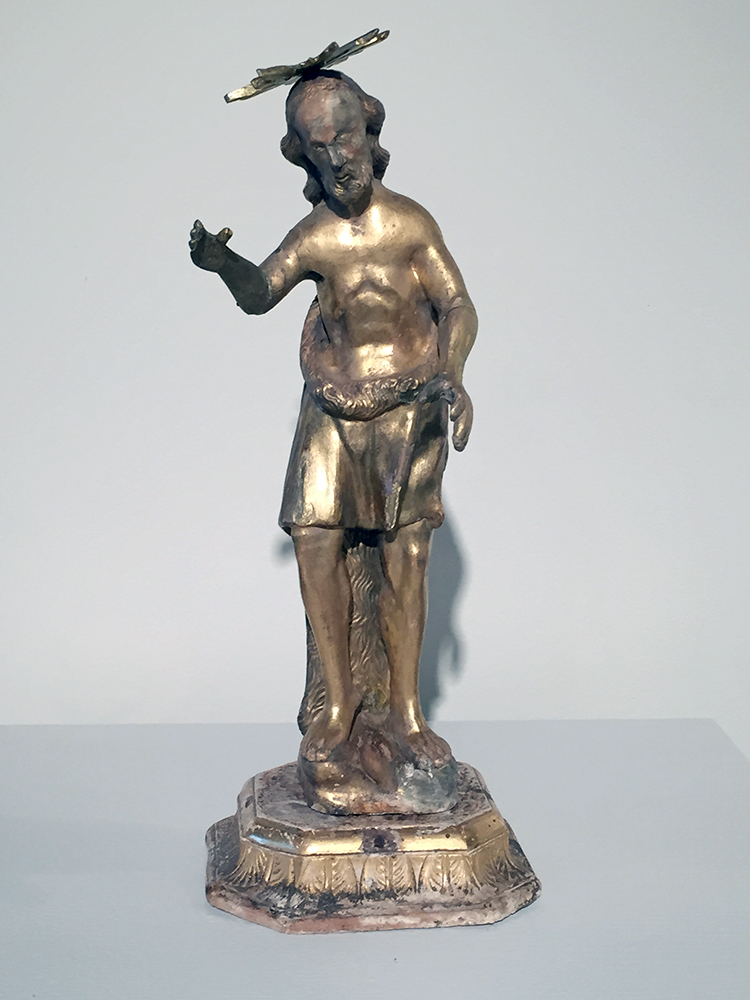
St. John the Baptist is a wooden sculpture from South Tyrol that depicts one of the most revered figures in Christian tradition. As the prophetic forerunner of Christ, John is remembered for preaching repentance and baptizing believers in preparation for Jesus’s coming. The gold figure stands bare chested, yet his waist is covered in a simple tunic. His long, flowing hair is finished with a cross-shaped halo symbolizing his prominent sainthood. The combination of simplicity and the gilded finish reflects the spiritual purity associated with John the Baptist. His slightly extended right hand and forward-leaning posture give the impression of gentle movement, perhaps calling followers toward spiritual renewal.
Falassi Collection

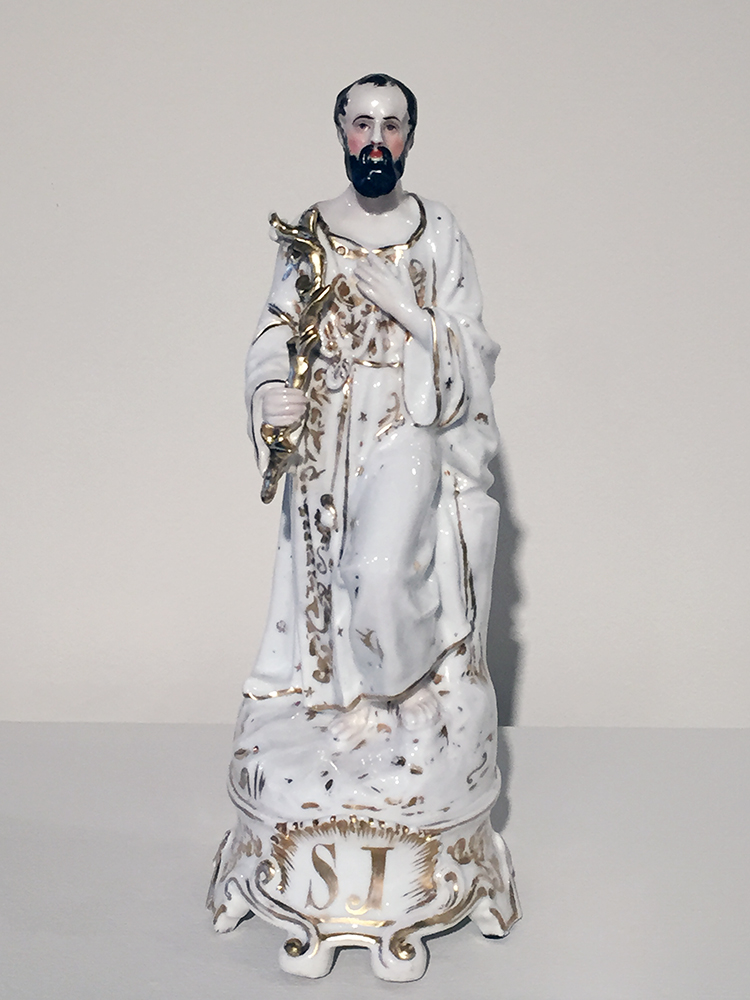
St. Joseph

This white porcelain statuette displays Saint Joseph, the earthly father of Christ and patron saint of workers and families. The figure is dressed in flowing robes, rendered entirely in white glaze with the addition of delicate gold accents. In his right hand, Joseph holds a flowering staff, a traditional symbol of divine purity while his left hand rests softly upon his heart. Saint Joseph stands atop an ornate pedestal inscribed with S.J., marking the initials of his name. Together, the white and gold palette and the serene posture give the statuette an air of quiet, elegant grace.
Item added to cart.
0 items - $0.00