About this Work
About the Artist
Italian
b. 1688 Milan
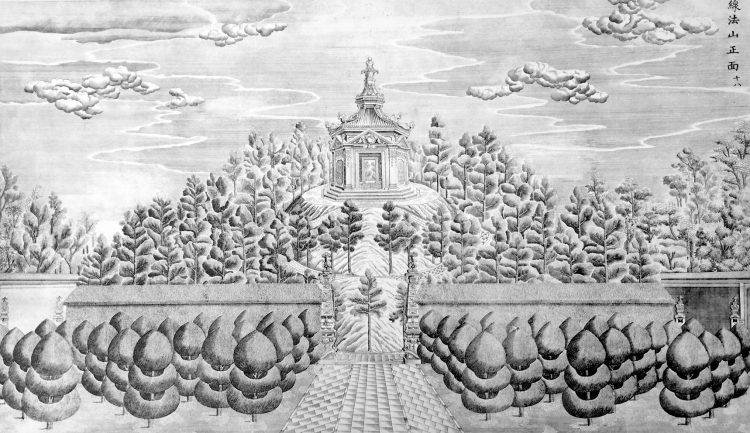
d. 1766 BeijingGiuseppe Castiglione was born in Milan in 1688. He studied painting in Genoa at the renowned Bottega degli Stampatori. He then joined the Society of Jesus, becoming a Jesuit Lay Brother. In 1715, as a Jesuit missionary, Castigione arrived in China at the Court of Kanghsi, the second Emperor of the Chinese Qing Dynasty. He served as an artist for the Court and continued as such for his successors, Emperor Yangzheng and Qianlong.The Summer Palace and the Yuanmingyuan—or Gardens of Perfect Brightness—which dated back to the 12th century, was a special retreat for the Emperor Kangshi. Later, the Emperor Qianlong decided to add gardens and palaces in a Baroque style, to house the European Art, furniture and clocks gifted by European Rulers to the Imperial Court. Qianlong commanded Giuseppe Castiglione to draw up plans for a series of Western mansions, waterworks and formal gardens. To do so, he had him choose his collaborators from among the Jesuits at Court. The buildings, fountains and gardens were built between 1737 and 1766. Delighted with the results, the Emperor commissioned copper engravings of the new buildings and gardens. Between 1783 and 1786 Chinese craftsmen made about twenty engravings based on drawings by Giuseppe Castiglione. Only three copies of these original engravings still exist; one of them is in the Bibliothèque Nationale in Paris.In 1860, the Old Summer Palace, in its time a unique example of Western architecture in China, was destroyed, ironically, by French and British troops during the Second Opium War. In 1977, the Jardin De Flore Publishing House reprinted 250 copies of the twenty engravings that had been designed by Castiglione and his fellow Jesuits at Court. The ten prints in the Museo Italo Americano’s collection are from a set of twenty, made from one of the only known sets of the original copper plates.
b. 1688 Milan
d. 1766 BeijingGiuseppe Castiglione was born in Milan in 1688. He studied painting in Genoa at the renowned Bottega degli Stampatori. He then joined the Society of Jesus, becoming a Jesuit Lay Brother. In 1715, as a Jesuit missionary, Castigione arrived in China at the Court of Kanghsi, the second Emperor of the Chinese Qing Dynasty. He served as an artist for the Court and continued as such for his successors, Emperor Yangzheng and Qianlong.The Summer Palace and the Yuanmingyuan—or Gardens of Perfect Brightness—which dated back to the 12th century, was a special retreat for the Emperor Kangshi. Later, the Emperor Qianlong decided to add gardens and palaces in a Baroque style, to house the European Art, furniture and clocks gifted by European Rulers to the Imperial Court. Qianlong commanded Giuseppe Castiglione to draw up plans for a series of Western mansions, waterworks and formal gardens. To do so, he had him choose his collaborators from among the Jesuits at Court. The buildings, fountains and gardens were built between 1737 and 1766. Delighted with the results, the Emperor commissioned copper engravings of the new buildings and gardens. Between 1783 and 1786 Chinese craftsmen made about twenty engravings based on drawings by Giuseppe Castiglione. Only three copies of these original engravings still exist; one of them is in the Bibliothèque Nationale in Paris.In 1860, the Old Summer Palace, in its time a unique example of Western architecture in China, was destroyed, ironically, by French and British troops during the Second Opium War. In 1977, the Jardin De Flore Publishing House reprinted 250 copies of the twenty engravings that had been designed by Castiglione and his fellow Jesuits at Court. The ten prints in the Museo Italo Americano’s collection are from a set of twenty, made from one of the only known sets of the original copper plates.